Atypify awarded Postcode Society Trust Grant

Atypify awarded Postcode Society Trust Grant

We’ve Received Funding from Postcode Society Trust!

We’re delighted to announce that Atypify has been awarded funding from the Postcode Society Trust, a grant-giving charity funded entirely by players of the People’s Postcode Lottery.

This support will enable us to continue creating spaces where neurodivergent girls, women, and non-binary young people can explore tech, build confidence, and connect through creativity, peer support, and digital learning.

At a time when many small organisations are navigating uncertainty, this grant means we can invest in new workshops, reach more young people, and strengthen the wellbeing support woven through all our programmes.

We’re proud to join the wider community of organisations funded by the Postcode Society Trust, and we’ll be sharing updates in the months ahead on how this funding is making an impact.

Thank you again to the Trust and to every player who makes this work possible.

Sim Cards & Free Data

Sim Cards & Free Data

Need free mobile data? We can help.

We’re excited to share that Atypify has joined the National Databank, an initiative led by the Good Things Foundation to tackle data poverty across the UK.

Thanks to this partnership, we can now offer free SIM cards and data from O2, Vodafone and Three to neurodivergent people who are digitally excluded and need support getting online.

Whether you’re job hunting, trying to access support services, studying online or just want to stay connected, we know how vital mobile data can be and how many people still don’t have reliable access.

If you’re neurodivergent and need free data, you can apply now through our website. We’ll review applications and be in touch with the next steps.

Please note:

  • SIMs are subject to availability and distributed on a first-come, first-served basis.

  • We’ll guide you through the Terms & Conditions for your network provider when we issue your SIM.

We’re proud to be part of the National Databank and to support our community in staying connected.

To apply for a free Sim Card and Data please fill select the button below and fill in the short form.

M

Sim Card Request Form

Name
Do you require a Sim Card?
Do you require international calls?
Are you aged 18 or over?
Are you on a low income?
Making the Web Accessible with ARIA

Making the Web Accessible with ARIA

As an autistic woman, I know how frustrating it can be when technology isn’t designed with different ways of thinking and interacting in mind. Imagine trying to order food online, apply for a job, or book a ticket—but the site doesn’t tell you what’s selected, which button to press, or whether a dropdown is open or closed. For many of us, this isn’t just an occasional inconvenience—it’s an everyday struggle.

The good news? We, as developers, have the power to fix this.

ARIA (Accessible Rich Internet Applications) is a tool that helps make websites usable for everyone. Let’s talk about what it is, why it matters, and how you can start using it today.


What is ARIA?

ARIA is a set of attributes that help assistive technologies, like screen readers, understand interactive elements on a webpage. It doesn’t change how things look or behave, but it fills in the gaps where native HTML isn’t enough.

Here’s what ARIA does:

  • Roles – Define what an element is (e.g., role="button" tells assistive tech that a div acts like a button).
  • States – Indicate dynamic changes (e.g., aria-expanded="true" for a dropdown menu).
  • Properties – Provide additional context (e.g., aria-label="Search" so a screen reader knows what a button does).

Think of ARIA as a way to explain your website to people using assistive tech, making sure they get the same experience as everyone else.


Why Should You Care?

1. It’s the Law

Accessibility isn’t just the right thing to do—it’s legally required in many places.

  • Americans with Disabilities Act (ADA) in the U.S.
  • Web Content Accessibility Guidelines (WCAG) used globally.
  • Equality Act 2010 in the UK.

Companies have been sued for not meeting accessibility standards. Avoid the legal risk and make your site accessible from the start.

2. It Expands Your Audience

Over 15% of the world’s population has a disability. That’s millions of potential users who might struggle to use your site if it’s not accessible.

3. It Improves UX and SEO

Accessibility-friendly sites tend to have better structure, easier navigation, and higher engagement, which also benefits search rankings.


How ARIA Works (With Examples)

Problem: A Dropdown Menu Without ARIA

Here’s an example of a dropdown menu that isn’t accessible:

<div onclick="toggleMenu()">Menu</div>
<ul>
    <li>Option 1</li>
    <li>Option 2</li>
</ul>

Problem: A screen reader has no idea this is a menu—it just sees a list of items.

Solution: Adding ARIA

<div role="button" aria-expanded="false" tabindex="0" onclick="toggleMenu()">
    Menu
</div>
<ul role="menu">
    <li role="menuitem">Option 1</li>
    <li role="menuitem">Option 2</li>
</ul>

Now, assistive technologies recognize:

  • The div as a button.
  • The aria-expanded state, indicating if the menu is open or closed.
  • The ul as a menu and each li as a menu item.

This small change can completely transform how a person with a disability experiences your website.


ARIA Best Practices

Before you start adding ARIA everywhere, keep these golden rules in mind:

  • Use Native HTML First – A <button> is better than div role="button".
  • Keep ARIA Updated – If a menu opens, make sure aria-expanded="true" updates dynamically.
  • Test with a Screen Reader – Tools like NVDA, VoiceOver, or ChromeVox can help you hear what users experience.
  • Follow W3C Best Practices – The ARIA Authoring Practices Guide is an excellent resource for getting things right.

Bad ARIA is worse than no ARIA. Misusing it can make things more confusing for assistive tech users.


The Bigger Picture

At the end of the day, the web is for everyone. Ignoring accessibility excludes people, while embracing it makes the internet better for all of us.

What You Can Do Right Now:

  • Check your site’s accessibility.
  • Try navigating with a screen reader.
  • Start using ARIA where it makes sense.

Even small tweaks can make a world of difference for someone who relies on assistive tech.

Let’s build a better, more inclusive web—together.

Want to Learn More?

More Than Tech: Atypify’s Launch Reveals a Community’s Urgent Need

More Than Tech: Atypify’s Launch Reveals a Community’s Urgent Need

Last weekend, something remarkable happened at The Autism Hub. What started as our Meet the Team event transformed into a powerful reminder of why Atypify exists in the first place.

The stories shared brought both tears and determination. One mother’s account of her autistic daughter’s unofficial school exclusion – not for any wrongdoing, but for speaking up about being physically assaulted – hit home hard. It’s exactly these systemic failures that fuel our mission. When schools lack proper safeguarding for neurodivergent and SEND young people, when parents struggle to balance work with caring for children pushed out of education, we know our work isn’t just important – it’s essential.

The turnout at both our launch and Sunday’s sessions was overwhelming. Each person who walked through our doors carried their own story, their own dreams, and most importantly, their own potential waiting to be unleashed.

But here’s the exciting part – we’re not just about tech education. We’re building a complete support ecosystem, and all of it is completely free:

🌈 Our Amazing Programs:
  • Tech classes that adapt to your learning style
  • Twice-weekly girls group led by the wonderful Samantha
  • Fortnightly LGBTQ+ queer group run by Ace, our fantastic nonbinary Director of youth outreach
  • Wellbeing sessions with Dr. Lauren (congratulations on passing your vivo!)
  • Monthly D&D sessions with Casper Creedy and Ace (because who said learning can’t involve dragons?)
  • And yes, we might even have special visits from Sara Donnelly and her therapy dog Ozzy! 🐕
The Magic of Our Space

Picture a place where wearing slippers is perfectly normal, where being yourself isn’t just accepted – it’s celebrated. Our team – Carole, Casper, Samantha, Lauren, Ace, Lara, and Kaitlyn – created an environment where genuine connections flourished over board games, shared stories, and countless moments of “finally, someone gets it!”

Supporting Our Mission

While our community services are free, we’re also offering professional services to sustain our work:

  • Oliver McGowan Mandatory Learning training
  • Mental Health First Aid training
  • Diagnosis and counselling services
  • Educational talks about neurodiversity and tech (and yes, we’ll happily chat about dungeons, dragons, and dinosaurs too!)
The Real Impact

During our launch, we saw something beautiful: people finding their tribe. Whether it was parents sharing similar struggles, young people lighting up at the mention of coding, or quiet nods of understanding during shared experiences – these moments confirmed what we already knew: Atypify isn’t just an organization, it’s a lifeline.

Looking Forward

Our doors are open to everyone who needs us. Whether you’re struggling with current educational systems, looking to learn tech skills, or simply seeking a community that understands you – we’re here. And no, we don’t believe neurodivergent parents should be forced to stay home – we believe in creating solutions that work for everyone.

Join Our Community

Every session, every group, every gathering is a step toward building the supportive environment our community deserves. Please join our mailing list, follow us on Instagram, TikTok, and LinkedIn to stay updated on all our activities and upcoming sessions.

Because at Atypify, we’re not just teaching tech – we’re creating the change we wish we’d had. And judging by our launch weekend, this is only the beginning. 💜

Atypify awarded Access Community Foundation Grant

Atypify awarded Access Community Foundation Grant

We’re delighted to announce that our Grants and Fundraising Lead, Kaitlyn,  has secured a significant grant from The Access Community Foundation. This funding will help us continue providing free tech education and workshops to neurodivergent young people across London, while enabling exciting new growth.

What’s Next

This grant allows us to expand our reach through:

  • Outreach initiatives to schools across London and surrounding areas
  • Enhanced support resources for our community
  • Expanded workshop offerings in technology and digital skills

Partner With Us

Are you working with neurodivergent young people or part of a school community? Our Projects and Partnerships Director, Lara, is actively seeking collaborations to bring our workshops to new locations. Whether you’re a school, community organization, or potential partner, we’d love to explore how we can work together.

Contact Lara or fill in our contact form at to discuss bringing our programs to your community.

Thank You

We’re grateful to The Access Community Foundation for their support in making tech education more accessible to neurodivergent young people. This grant helps ensure our services remain free and available to those who need them most.

The Story Behind Atypify’s Logo

The Story Behind Atypify’s Logo

Our journey to create Atypify’s visual identity is a story of precision meeting purpose. As a non-profit dedicated to making technology education accessible to neurodivergent individuals, we wanted a logo that would embody both technological precision and creative thinking. What better way to represent this than through the art of origami?

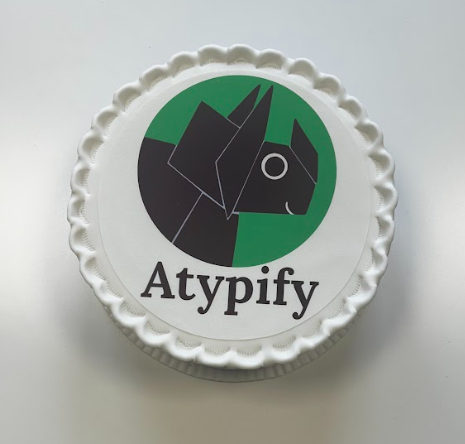
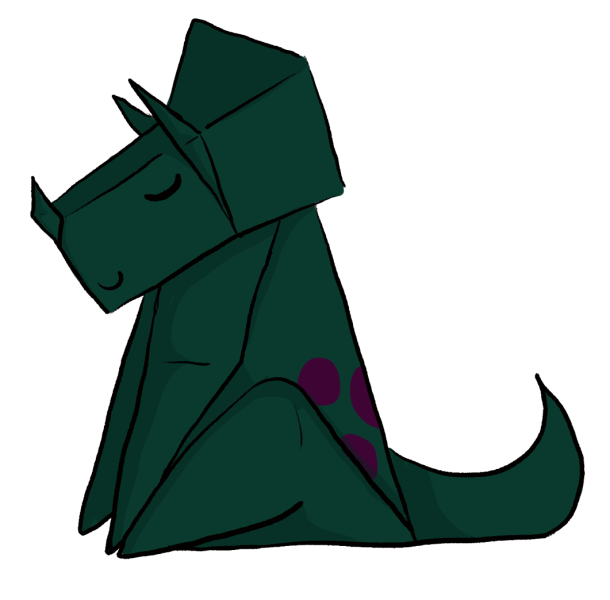
The original concept, designed by Ace (any pronoun), featured our signature origami triceratops set against a vibrant green circle. The choice of a triceratops wasn’t random – like our community, these prehistoric creatures were unique, powerful, and adapted to thrive in their environment. The geometric folds of the origami design reflect the structured yet creative nature of both technology and neurodivergent thinking.

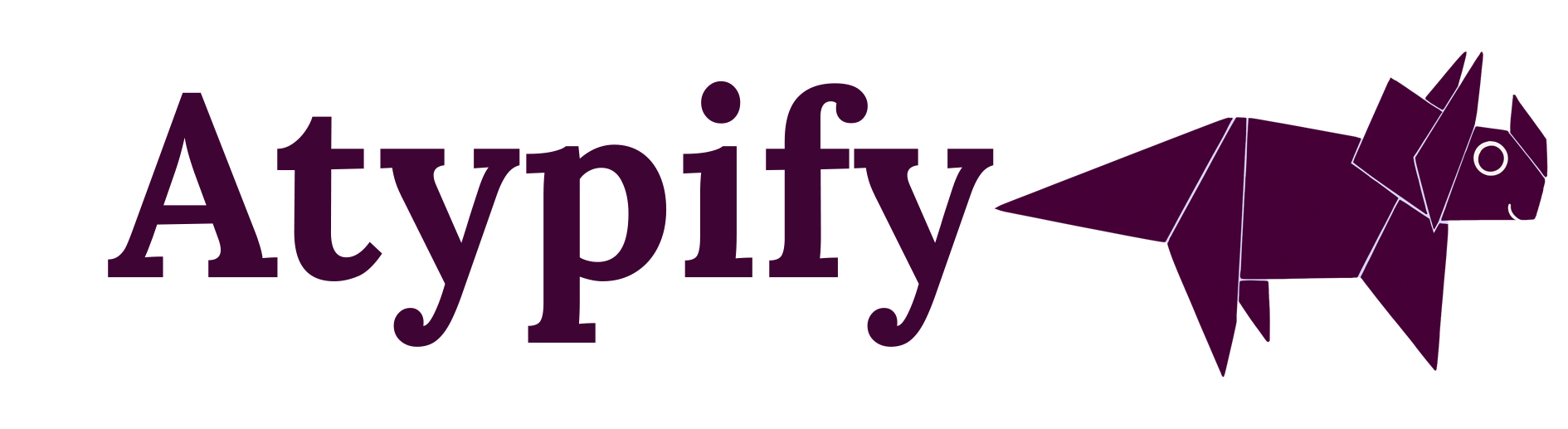
The final iteration, refined by Narla Creedy (they/them), transformed the design into a horizontal format that maintains all the original’s strength while adding versatility. The monochromatic purple palette represents our commitment to creating a warm, accepting space where everyone belongs. Each fold line in the triceratops remains visible, celebrating the beautiful complexity of origami and mirroring the diverse ways neurodivergent minds process information.

The symbolism in our logo runs deep. The origami art form itself represents the beautiful intersection of precision and creativity. Like coding and technology, origami follows specific patterns and rules, yet produces something artistic and unique. This mirrors how neurodivergent minds often excel at seeing both logical patterns and creative solutions.

We chose a Triceratops because these dinosaurs thrived through adaptation and possessed unique features that made them stand out. They were also notably social creatures that lived in groups, reflecting our emphasis on community support and belonging. The three horns of the triceratops could be seen as representing our three core values: education, acceptance, and empowerment.

The geometric lines within the design show how complex and beautiful structured thinking can be. Each fold line represents a different way of approaching problems and learning – there’s no single “right” way to fold an origami creation, just as there’s no single “right” way to think or learn.

What makes this logo particularly meaningful is that it was created by members of the communities we serve. Both artists, being neurodivergent and part of the LGBTQ+ community, brought their lived experiences and understanding to the design process. Their perspectives helped create a logo that truly represents our mission of making technology education more inclusive and accessible.

Our purple colour palette represents neurodiversity and our connection to the broader LGBTQ+ community. Purple has long been associated with creativity, wisdom, and dignity – values we see abundantly in our community members. The transformation of a flat piece of paper into a three-dimensional creature mirrors our mission: taking existing tech education frameworks and reshaping them to be more accessible and inclusive for neurodivergent learners.

The geometric precision of origami perfectly symbolises what Atypify stands for – the intersection of creativity and technical skill, the beauty of different ways of thinking, and the transformative power of education.

Subscribe To Our Newsletter

Join our mailing list to receive the latest news and updates from our team.

You have Successfully Subscribed!